Marvel Rivals ranked climb or hardstuck excuses
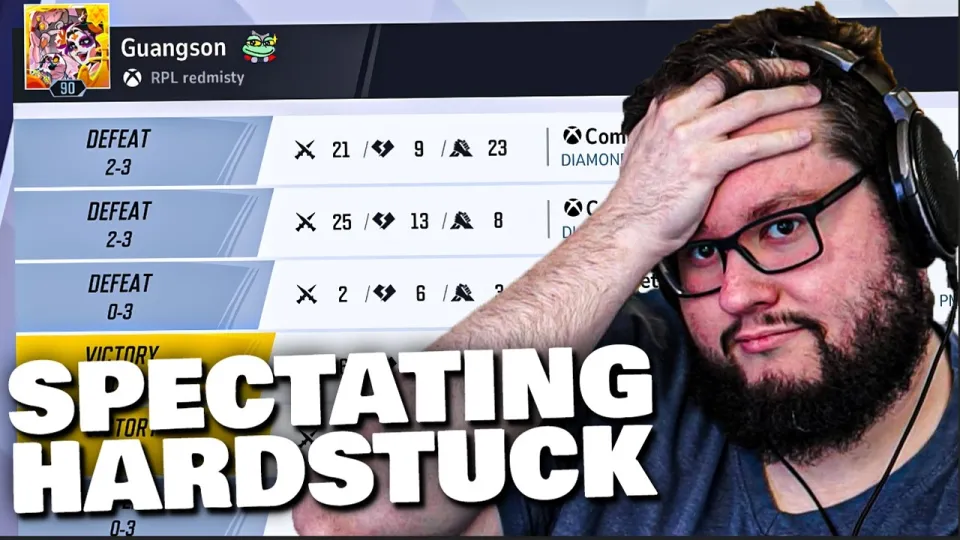
Video: I Spectated Someone Who Claimed To Be Hardstuck In Marvel Rivals
Need articles like this for your video? They help promote it on YouTube and Google — order them in the Telegram bot @sat_sit_bot. Articles with your video embedded are written and posted by the bot itself — on popular topical sites (no ads). Try it free: 50 articles on us.
In Marvel Rivals, the ranked climb stalls for one reason far more often than any other: players blame their teammates instead of fixing the decisions they control. A Flats spectating session built around a player who claimed to be hardstuck showed exactly that pattern, and anyone who wants to climb should treat it as a checklist of what not to do. Flats streams that kind of review live on his Twitch channel, where the VODs and the chat reaction are half the lesson.
The setup was simple. A player in Grandmaster insisted his rank was the fault of the people around him, so Flats watched his games instead of arguing. What followed was a catalog of small, repeatable errors: a support played as a pure healer, a Rocket Raccoon built around damage, a health pack ignored while the player searched for one, and an ultimate thrown away at the worst possible moment. None of these are mechanical failures. They are choices, and choices are what separate a player who climbs from one who stays put.
Why the Marvel Rivals hardstuck claim fell apart under spectating
The core problem with the hardstuck claim is that it is unfalsifiable from the inside: every loss has a teammate to blame. Spectating removes that excuse, because the camera shows the decisions the player never mentions. In this case the player was a Spider-Man main who moved onto support, and the switch explained a lot. Duelist habits carried over into a role that rewards positioning and resource management, and the results showed it. Flats' review kept returning to the same idea: the player was not losing because of the lobby, he was losing because he did not understand what his new role was supposed to do.
That gap between self-image and role knowledge is the most common form of being stuck in Marvel Rivals. A player who thinks of himself as a playmaker will chase kills on a healer, hold an ultimate for a highlight instead of a fight, and treat the backline as a place to visit rather than a place to defend. The rank badge says Grandmaster, but the decision-making says otherwise, and the matchmaker eventually agrees.
Cloak & Dagger played as Dagger only
The single most repeated observation about the session was that the player was running Cloak & Dagger as a Dagger-only healer. Cloak & Dagger is a two-form hero, and the entire point of the kit is switching between them: Dagger for healing and area denial, Cloak for the blind and the damage window that lets the team finish a fight. Sitting in Dagger form the whole game leaves half the hero unused and turns a flexible support into a healbot with no playmaking tool.
Why this matters in ranked terms:
- Dagger's healing output alone rarely wins a fight that the team is losing on tempo.
- Cloak's utility creates the kill windows that turn a stalemate into a push.
- A support who never swaps forms gives the enemy dive a free target with no retaliation.
- The ultimate requires knowing when to commit, and a Dagger-only player usually holds it too long.
The fix is unglamorous. Learn one swap pattern, drill it in quick play, and stop treating the second form as an emergency button.
No-damage Rocket and other support myths
The Rocket Raccoon game became the clearest illustration of a bad build. Rocket's value comes from sustained healing, the revive beacon and the armor packs, plus a gun that is genuinely useful for shredding shields and finishing targets. A player who refuses to deal damage on Rocket is leaving a real tool on the table, but a player who builds around damage and forgets the healing is doing something worse. The review made the point bluntly: the no-damage Rocket approach damages Rocket's reputation more than it helps anyone's rank.
Support players in Marvel Rivals tend to fall into two camps, and both are wrong in the same way. One camp thinks healing numbers are the job and never shoots. The other thinks damage is the job and lets the team die. The actual job is reading the fight: if your tank is holding, you can pressure; if your backline is collapsing, you heal and reposition. That reading is a skill, and it is the skill the spectated player had never built.
The small mistakes that decide Marvel Rivals matches
A health pack sits a few steps away, and the player walks past it while looking for a health pack. That moment landed harder than any big misplay, because it is not about aim or hero knowledge at all. It is about attention. The same pattern showed up in the ultimate usage: a Magneto ultimate committed into a fight that was already lost, followed by the visible slump of a player who had just wasted the team's best tool.
These are the errors that cost matches in Marvel Rivals at every rank:
- Ignoring map geometry, including health packs, cover and high ground.
- Spending ultimates after a fight is decided rather than before it turns.
- Playing a role without knowing its win condition.
- Refusing to swap heroes when the enemy composition demands it.
- Reviewing losses by watching the scoreboard instead of the replay.
None of these require better mechanics. They require a player to watch his own games with the same critical eye he aims at his teammates.
What viewers took away from the session
The reaction around the stream settled on a few themes. Several viewers pointed out the irony that the player had accidentally proven teammates can hold you back, just not in the way he meant. Others focused on the ego gap, noting that a player with a losing record can still climb in Marvel Rivals because the ranked system rewards volume, which hides bad habits rather than correcting them. The most common sentiment was recognition: this is the teammate everyone meets at 99 out of 100 points toward the next rank.
The practical takeaway is not that the player is uniquely bad. It is that his habits are ordinary. Most stuck players share two or three of them, and the reason they stay stuck is that they never watch the replay where those habits are visible. A single recorded review, done honestly, is worth more than a hundred games played on autopilot.
Where to find Flats and the rest of his channels
Flats publishes these spectating breakdowns and live ranked sessions across several platforms, and each one serves a different purpose:
- https://www.twitch.tv/flats — live streams and the full spectating sessions
- https://discord.gg/flats — community discussion and VOD talk
- https://twitter.com/Flats_Ow — clips and schedule updates
- https://www.tiktok.com/@flats_ow — short highlights
- https://www.facebook.com/FlatsTTV — page updates
If you want to see how a coach reads a Marvel Rivals replay in real time, the live channel is the place to start, because the chat reaction often catches details the review itself skips.
Conclusion
The Marvel Rivals hardstuck story is not really about one player's rank; it is about the gap between how players describe their games and how they actually play them. A Dagger-only Cloak & Dagger, a Rocket built for the wrong job and a health pack walked past add up to a player who never had a chance to climb, no matter who was on his team. Flats built the whole breakdown around that gap, and his channel is the reason the lesson lands: watching someone else's mistakes is cheaper than making your own. If you want more of these reviews, catch the live sessions on Flats' Twitch stream and take notes on your own replays afterward.
Key takeaways
- Flats spectated a Marvel Rivals player who insisted his teammates were the reason he could not climb out of Grandmaster.
- The player was a Spider-Man main who switched to support and played Cloak & Dagger as a Dagger-only healer.
- A Rocket Raccoon game with minimal damage healing output became the clearest example of a build that does not work.
- The player walked past a nearby health pack while searching for one, a moment Flats highlighted without comment.
- The session ended with the player's own gameplay, not his teammates, as the explanation for the stalled rank.
Questions & answers
Is being hardstuck in Marvel Rivals really your teammates' fault?
Sometimes teammates cost a match, but they do not keep a player at the same rank across hundreds of games. The spectated player's losses came from role decisions, ultimate timing and map awareness, all of which he controlled. Blaming the lobby is comfortable, but it removes the only thing a player can actually change.
Why is Cloak & Dagger played as Dagger only a problem?
Dagger covers healing and area control, while Cloak provides the blind and the damage window that closes fights. Staying in one form leaves half the kit unused and makes the hero a passive healbot. Swapping forms at the right moment is the skill that separates an average Cloak & Dagger from a strong one.
Should Rocket Raccoon deal damage or only heal?
Both, depending on the fight. Rocket's healing and revive beacon are his core value, but his gun is genuinely useful for breaking shields and finishing low targets. Building entirely around one side of the kit wastes the other, and a no-damage approach gives Rocket a worse reputation than he deserves.
How do I actually climb out of a stuck rank in Marvel Rivals?
Watch your own replays instead of the scoreboard, and look for the repeatable errors: wasted ultimates, ignored health packs, wrong hero picks and role confusion. Pick one habit per week and fix it in quick play before taking it into ranked. Volume alone will not correct habits you never notice.
Source: I Spectated Someone Who Claimed To Be Hardstuck In Marvel Rivals · Markdown version